Transformative Impact of Citizen Science on Environmental Governance: a systematic analysis of Perspective and Pathways (2025-2029)
In January 2025, a pioneering five-year research project in the field of citizen science was launched at the Estonian University of Life Sciences (EMÜ). The project is based on the hypothesis that citizen science can influence environmental decision-making at various stages of governance and offer new opportunities for driving change.
While citizen science has traditionally been viewed through the lens of individual learning and scientific contribution, this project takes a broader perspective — exploring how citizen science might lead to structural (i.e. transformative) changes in environmental governance. There are already several citizen science initiatives in Estonia, led by universities, government agencies, and NGOs. This project will examine the nature, participatory mechanisms (models), and outcomes of both existing and potential new citizen science initiatives in relation to environmental governance. We aim to place citizen science into a larger context of socio-technical systems: which elements of these systems (e.g. individual or community practices, regulations, culture, science) can the citizen science initiatives affect? By doing so, the project aims to identify the most effective ways for citizen science to make a broader impact, enhance citizen engagement, and clarify its role in environmental management.
The project helps to fill a gap in scientific knowledge, as the impact of citizen science initiatives in Central and Eastern Europe remains underexplored. The results will contribute to the development of more effective and systemic models of citizen science that support wider societal transformation, both in Estonia and internationally.
The project: “Transformative Impact of Citizen Science on Environmental Governance” is funded by the Estonian Research Council (grant no. PRG2632).
Webinar: Local communities and using citizen science in risk management
On 4 November 5.30-7.00PM (EET), the European Local Development Network Association (LDnet) and the Estonian University of Life Sciences’ CS4Change project will host an online webinar on the role of citizen science in environmental risk management.
News and Events
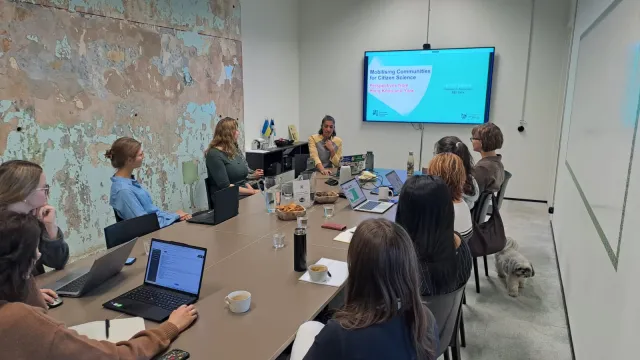
CS4Change Shared Its Citizen Science Experience at SEI Tallinn
CS4Change team members shared their experience of using citizen science in environmental governance. The meeting also explored the activities of the Viimsi Living Lab and ways to engage with community
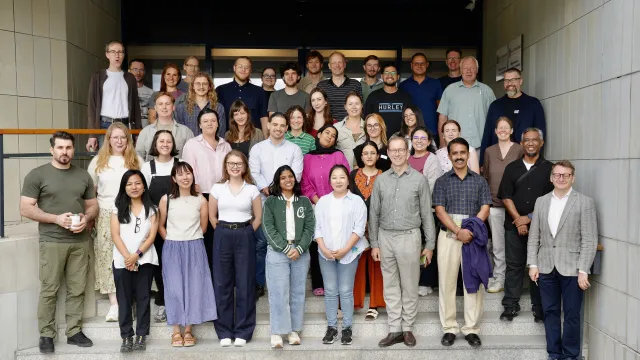
ACT! Summer School Combined Sustainable Land-Use Research and Citizen Science
The international ACT! Summer School explored sustainable land use by combining spatial data and modelling with CS4Change perspectives on citizen science and participatory monitoring.

Citizen Science motivation day
On 27 May 2026, the citizen science motivation day “But what drives you?” took place in Tartu, bringing together members of the Estonian citizen science network, researchers and public sector.

The CS4Change living lab in Viimsi’s forests is launching its activities.
CS4Change is launching a living lab in Viimsi’s forests, where researchers, the municipality and the community explore how citizen science can protect nature and involve people in decisions.

CS4Change 2nd Consortium meeting!
At the end of March, the CS4Change consortium met in Tartu to share progress, discuss common questions, and plan the next steps in the project’s development.

CS4Change in Brussels
On 12 March, Laura Killak and Mart Külvik represented the CS4Change project at the ScienceUs inspiration and networking event From Citizen Science to Decision-Making in Brussels.
The project explores the nature of citizen science on two levels: globally and through Estonian initiatives. We focus on the following research questions:
- What evidence exists of the transformative impact of citizen science on environmental governance worldwide? What challenges to achieving such impact have been documented?
- How do different citizen science models affect the various environmental decision-making phases and what is their transformative impact on environmental governance?
- What are the transformative perspectives of the selected CS initiatives in environmental governance?
- Which sustainability transition intervention points (e.g. science, regulations, individual practices) can the selected CS cases influence, to transform environmental governance?
The logo was created by our junior researcher Ghieth Alkhateeb to reflect the core ideas of the project: citizen participation, knowledge-sharing, and the connection between people, science, and environmental governance. It also draws inspiration from the University of Life Sciences brandinglink opens in new page, aiming to create a sense of visual consistency and alignment with the university’s identity.

At its centre is a circular form that resembles an eye, representing observation, a key function of citizen science. This eye-like shape also speaks to attentiveness and the act of seeing together, collectively.

Surrounding it, repeated curved elements convey a sense of shared participation. These forms are soft and flowing, not rigid, highlighting the adaptability needed for a project that crosses disciplines, platforms, and audiences.
Where these shapes meet, they suggest collaboration—the coming together of volunteers and scientists through shared purpose and interaction.

The combination of organic curves and a clear geometric layout reflects the balance between human input and technological systems. The design remains open and accessible.

This sense of clarity is reinforced by a minimal visual style and the use of flat colours, which help make the message direct and easy to understand.

inally, the open forms and use of negative space express transparency, supporting the project’s commitment to openness, trust, and inclusivity.
Altogether, the logo creates a visual language that is simple yet intentional, grounded in the project’s values and flexible enough to speak across contexts.

Citizen science refers to scientific activities involving the participation of volunteers. It's an opportunity for volunteers to be part of different scientific stages, e.g. in formulating problems, collecting data, finding solutions, and implementing them. Citizen science creates a bridge between scientists and the wider public, enabling the democratization of science and offering pathways to involve society in evidence-based policymaking.
It is important to emphasize that citizen science is not merely about studying volunteers or educating the public about science. Rather, it requires active involvement and contributions to scientific research. Since citizen science has a broad meaning, several criterialink opens in new page have been proposed to help better understand what qualifies an activity as citizen science:
- Active participation of volunteers – participants are not objects of study but are actively involved in the research process.
- Learning and engagement – volunteers should participate at least in data collection; participation should go beyond mere science communication.
- Voluntary nature of participation – activities are usually unpaid and voluntary, though they may also be part of educational curricula.
- Lack of formal education and scientific challenge – participants may not be experts in the field but are aware they are contributing to scientific research.
- Power relations – projects should promote a more open and inclusive science, ensuring at least a minimal level of active engagement.
- Data transparency – data from citizen science projects should be publicly accessible, unless doing so would compromise privacy or safety.
In addition to the above, the European Citizen Science Association (ECSA) has established Ten Principles of Citizen Sciencelink opens in new page, which aim to ensure high-quality and ethical citizen science. These principles highlight, among other things, the importance of recognizing participants' contributions, adhering to scientific methods, and ensuring open access to data and results.
In November 2024, our junior researcher Carmen Kilvits was selected as Estonia’s Citizen Science Ambassador by the European Citizen Science Association (ECSA). In her PhD research, Carmen explores how environmental citizen science initiatives can support decision-making in environmental policy.
As an ambassador, Carmen works to strengthen collaboration between Estonian and international citizen science initiatives and shares Estonia’s experiences and achievements with the wider European community.
She also invites anyone interested in the field to join the Estonian citizen science mailing list ([email protected]), where you can find important updates, useful resources, and take part in discussions about the development of citizen science in Estonia.
To subscribe to the list, simply send an email to [email protected]
The project acronym CS4Change and the slogan “Citizen Science Transforms” express our broader belief in the power of citizen science to shape change — within scientific processes and in society, policy, and everyday life. They serve as a reminder that transformation begins when people are engaged, informed, and empowered to contribute.
Project manager

Monika Suškevičs
Associate Professor of Participatory Environmental Governance (tenure-track)
Institute of Agricultural and Environmental Sciences
Chair of Environmental Protection and Landscape Management
+372 7313773
+372 7313773