
CS4Change Shared Its Citizen Science Experience at SEI Tallinn
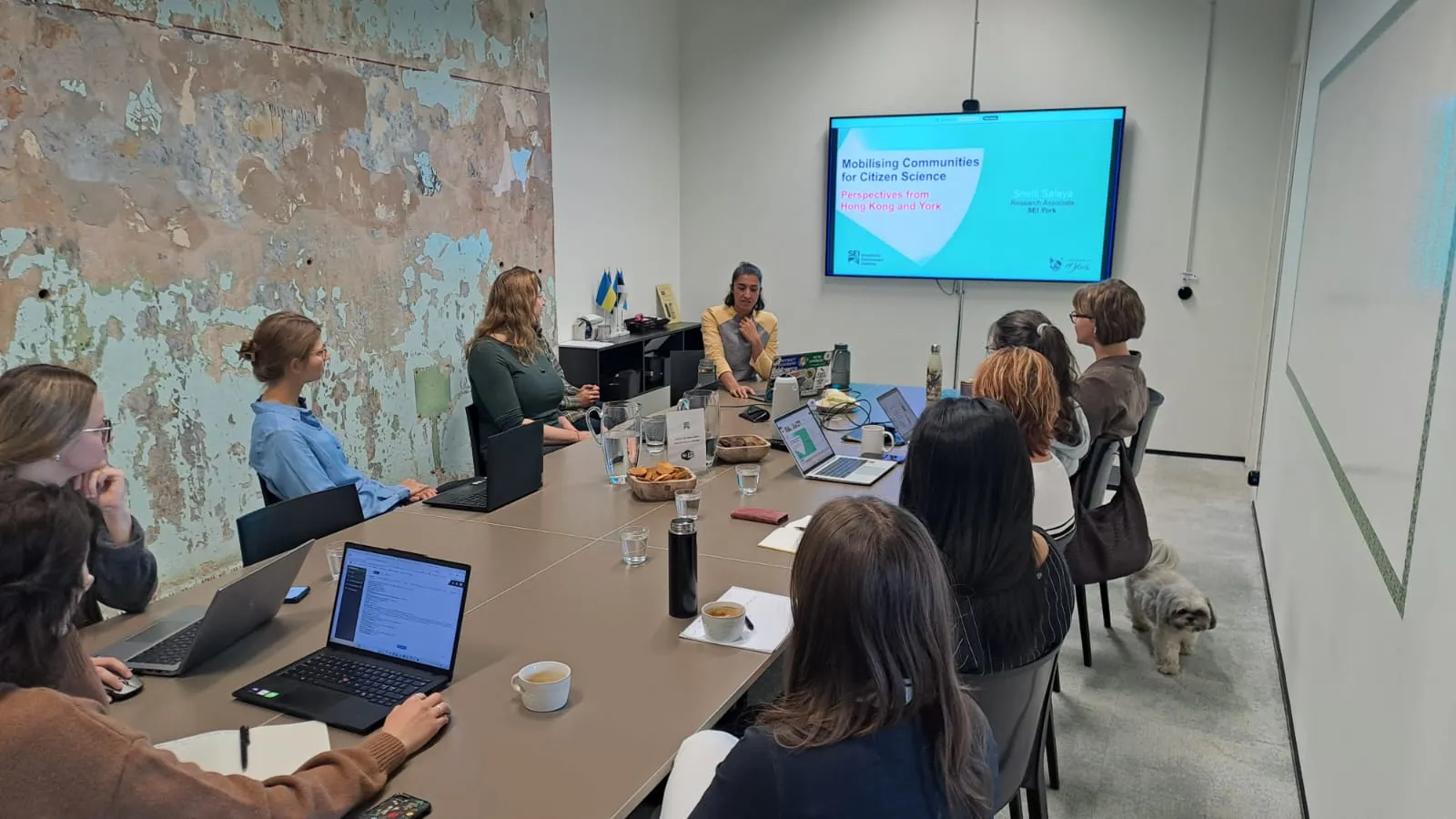
On 21 September 2026, CS4Change team members Monika Suškevičs and Carmen Kilvits participated in a citizen science capacity-building and exchange meeting at SEI Tallinn.
The meeting brought together SEI Tallinn colleagues who already use citizen science and community engagement methods in their work, as well as those interested in learning more about these approaches. Smriti Safaya from SEI York shared experiences from York and Hong Kong, where citizen science has been used in schools and local communities. Her work includes air quality monitoring, biodiversity observations and activities that strengthen people’s connection with nature.
Monika Suškevičs and Carmen Kilvits discussed how citizen science can support systemic change in environmental governance. They introduced the CS4Change project, provided an overview of the citizen science landscape in Estonia and presented the project’s work on organising knowledge related to environmental risks and forest governance.
Particular attention was given to the Viimsi Living Lab, where researchers, the local government and the community are working together to connect citizen science more closely with local environmental governance. The discussion generated new ideas for involving a wider range of Viimsi residents and making community knowledge and observations more useful for decision-makers.
The meeting provided an opportunity to compare experiences and discuss how citizen science initiatives can be designed to support community participation and contribute more effectively to environmental decision-making.
ACT! Summer School Combined Sustainable Land-Use Research and Citizen Science
The international ACT! Summer School took place in Tartu from 10 to 17 August 2026. It brought together Master’s and doctoral students as well as early-career researchers from different countries. The programme focused on land-use and land-cover change in the context of climate change and biodiversity loss.
During the week, participants explored Earth observation, drone-based data collection, spatial data processing, land-use modelling, and the role of policy and governance in shaping land-use decisions. Practical sessions introduced tools such as QGIS, Google Earth Engine and different modelling approaches.
The programme also addressed participatory research, living labs and citizen science. CS4Change contributed perspectives on citizen science and participatory monitoring, helping to connect scientific evidence with the experiences of local communities and environmental decision-making.
The teaching team from the Estonian University of Life Sciences included Raul Sampaio De Lima, Kalev Sepp, Anton Shkaruba, Monika Suškevičs and Ruthi Veibiakkim. Together with international lecturers, they covered topics ranging from spatial data, biodiversity and land-use governance to participatory research methods.
Participants worked in international and interdisciplinary groups to develop research and solution-oriented proposals for practical land-use challenges. The summer school concluded with group presentations and a joint synthesis of the main findings.
The ACT! Summer School was organised within the Europe-LAND and SUNRISE projects, with support from the Baltic University Programme and CS4Change.
Read more about the ACT! Summer School.link opens in new page
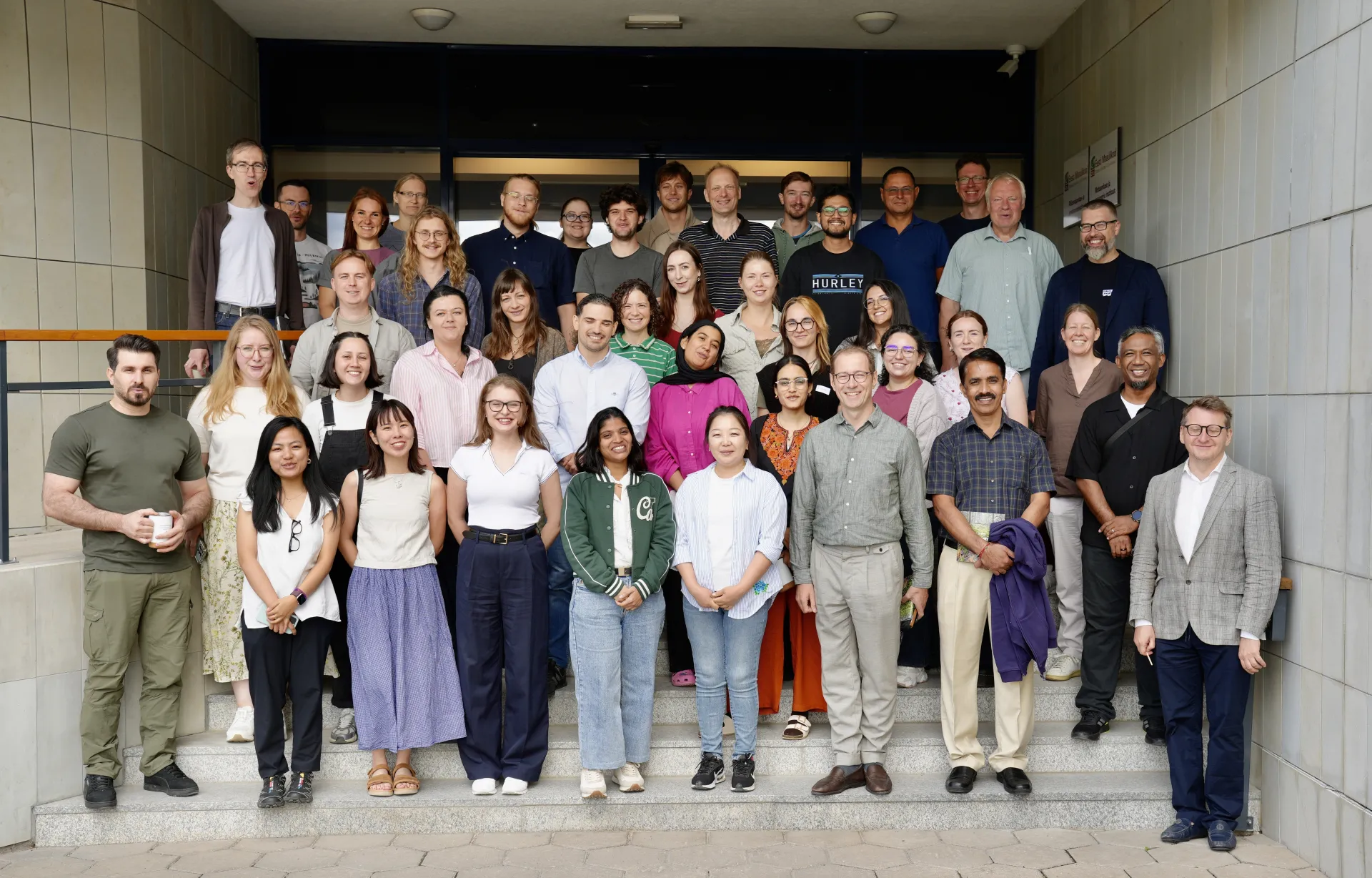
Photo author: Laura Killak
Citizen science motivation day explored what drives people to participate
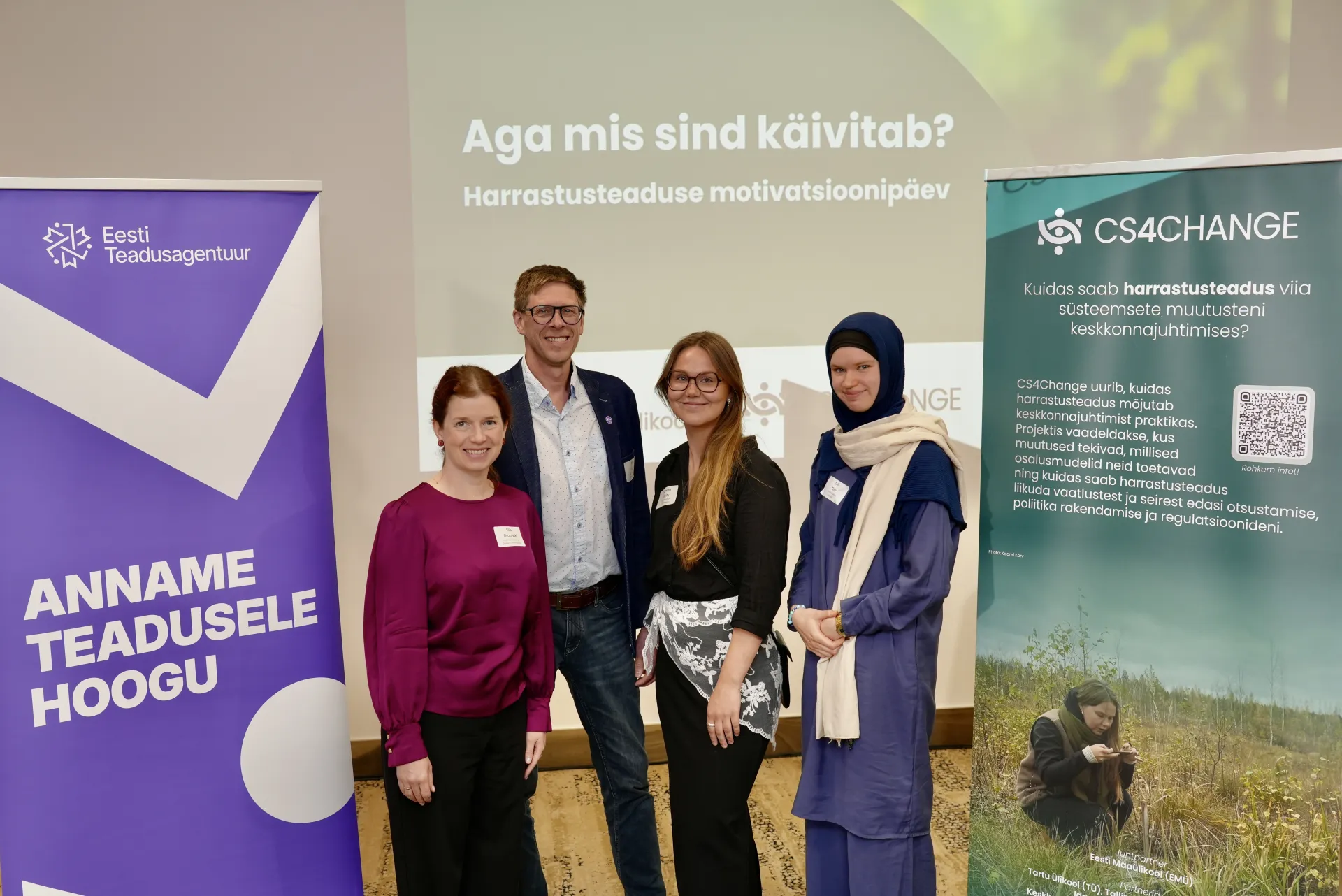
On 27 May 2026, the citizen science motivation day “But what drives you?” took place in Tartu, bringing together members of the Estonian citizen science network, researchers, public sector representatives, practitioners and everyone interested in understanding what motivates people to take part in citizen science.
The event was organised by the Estonian Research Council and the CS4Change project. For CS4Change, the seminar was an important opportunity to look more closely at participation, motivation and communication in citizen science initiatives. These questions are central to the project, which explores how citizen science can support cooperation between researchers, communities, public sector actors and other stakeholders.
Throughout the day, speakers and participants discussed what encourages people to contribute their time and knowledge, what may hold them back, and how existing and new citizen science initiatives can create more meaningful and sustainable participation experiences.
The first part of the day focused on the broader context of volunteering and motivation. Kadi Kass from the University of Tartu gave an overview of the current situation and future perspectives of volunteering in Estonia. Triin Korv from the Estonian University of Life Sciences then presented insights into the motivation of participants in Estonian environmental citizen science.
The second part of the seminar turned to practical experiences and examples. Liisa Rennel from the Estonian Environment Agency discussed the motivation of volunteers involved in environmental monitoring, focusing on the differences between one-time and long-term participation. Piret Pungas-Kohv from the Estonian Fund for Nature shared a case of walking, observation interest and citizen science in a restored mire. Riho Kinks from the Estonian Research Council raised the question of why people may choose not to participate in citizen science.
In the afternoon, the focus shifted to communication and the ways motivation can be shaped and supported. Maie Kiisel from the University of Tartu discussed how communication can make the experience of nature conservation more meaningful. Participants who attended the event in Tartu also took part in a workshop on maintaining and growing motivation in citizen science initiatives. The workshop gave participants the chance to reflect in smaller groups on how to strengthen participation in both existing and new initiatives.
One of the key messages of the day was that participation in citizen science does not rely on goodwill alone. People are more likely to stay involved when they understand the purpose of their contribution, receive feedback, feel part of a community and see that their input has real value. Clear and thoughtful communication plays an important role in building this experience.
The motivation day showed that citizen science in Estonia is developing on a strong foundation of experience, interest and cooperation. At the same time, it highlighted the need to keep asking how citizen science initiatives can be designed in a way that supports long-term participation, trust and mutual learning.
Thank you to all speakers, participants and contributors for sharing their experiences and ideas. Special thanks to the main coordinators of the event for making the day run smoothly.


The CS4Change living lab in Viimsi’s forests is launching its activities
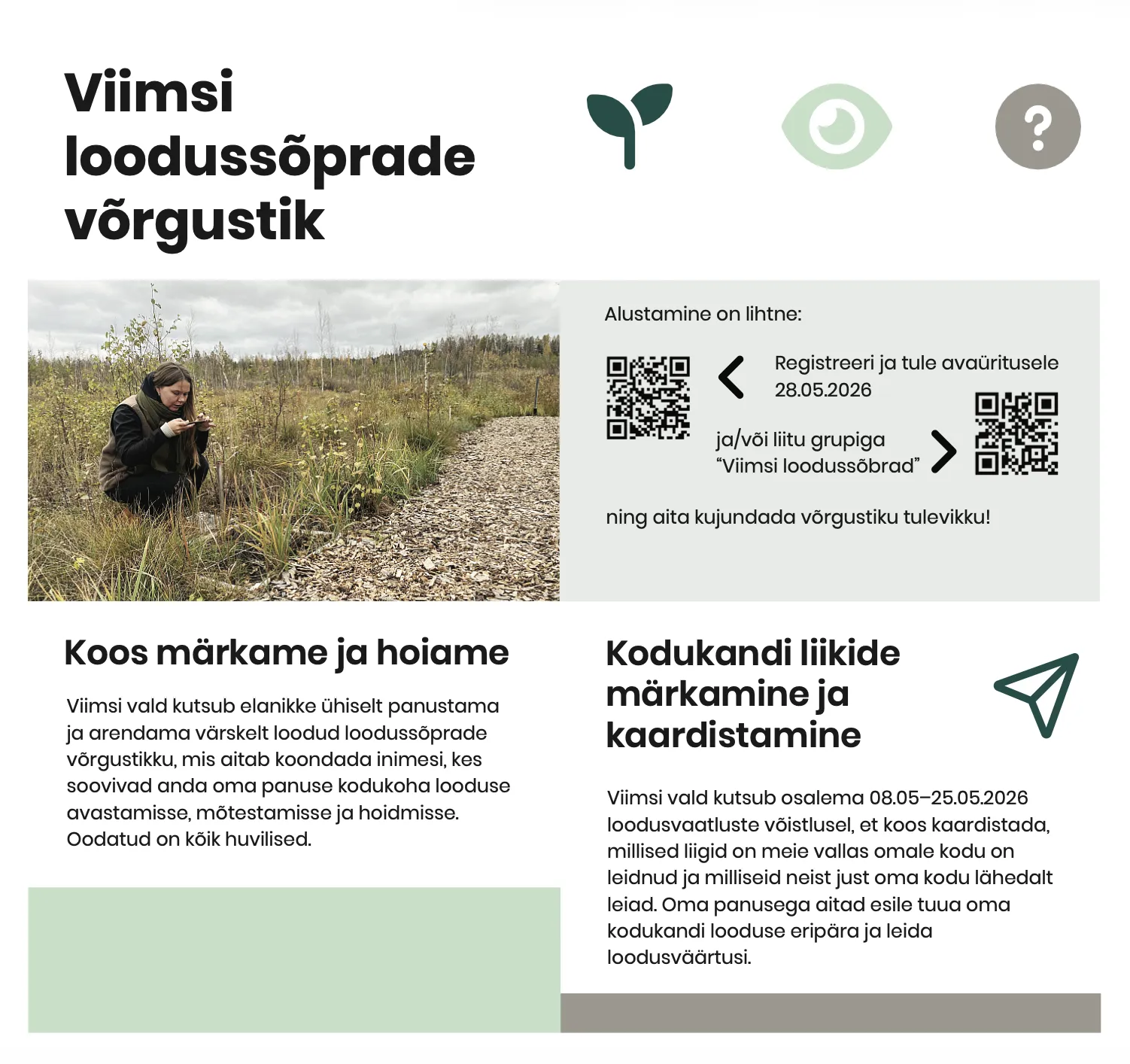
As part of CS4Change, a living lab focused on the forests of Viimsi is being launched. It is a form of collaboration in which researchers, the local government and the community work together to ensure that local people have a greater role in shaping and caring for their living environment.
A living lab means that we are co-creating and testing new ways for the community to contribute to environmental management and the preservation of local values through citizen science.
Next week, Viimsi Environment Week begins, and visitors to Viimsi are also welcome to take part. See the programme here. On Monday, our project activities will focus on the forests of Viimsi as one of the true gems of Viimsi’s natural environment. At 5:00 p.m., there will be a guided study walk led by Liis Kuresoo, where we will learn how to map the valuable habitats of Mäealuse. At 6:45 p.m., a discussion evening on the values of the Mäealuse landscape protection area will begin at the Randvere Day Centre.
As part of Viimsi Environment Week, a nature observation competition will also begin, open to both local residents and visitors to Viimsi. Post your nature observations from Viimsi and help notice and value local nature.
See the brochure below for more information.
CS4Change 2nd consortium meeting!
At the end of March, the CS4Change project team came together in Tartu for the second consortium meeting. Held on 26 and 27 March 2026 in Metsamaja and online, the meeting brought together project partners to review progress across work packages, reflect on the project’s first year, and agree on the next steps.
The first day focused on updates from the work packages. Discussions covered systematic evidence syntheses, case studies, data flow analyses, living labs, communication activities, and project management. These sessions gave the team a chance not only to share progress, but also to discuss challenges, ask questions, and identify links between different parts of the project.
A key theme across the meeting was the need for clearer shared terminology. Several discussions returned to how concepts such as transformation, impact, and policy relevance are understood across the project. This highlighted the importance of building stronger conceptual clarity and making sure that the different strands of work support one another more effectively.
The meeting also underlined the value of looking more closely at how citizen science data and knowledge move through different stages, from collection and validation to analysis, interpretation, and policy use. Alongside this, discussions explored the human side of citizen science, including the role, motivation, and agency of participants, as well as the kinds of change that citizen science may support at individual, organisational, and wider societal levels.
The second day focused on cross-work package collaboration through a Synergy Canvas workshop. This created space to identify shared questions, overlapping themes, and practical opportunities for joint action. The discussions showed the importance of stronger connections between work packages and a more regular exchange of methods, findings, and perspectives.
Overall, the second consortium meeting was an important step in strengthening CS4Change as a shared project. It offered time for reflection, discussion, and joint planning, while reinforcing the value of collaboration in understanding how citizen science can contribute to environmental governance and change.

Photo author: Laura Killak
CS4Change took part in a Brussels meeting on citizen science and decision-making
On 12 March, Laura Killak and Mart Külvik represented the CS4Change project at the ScienceUs inspiration and networking event From Citizen Science to Decision-Making in Brussels.
The meeting brought together representatives of citizen science projects, working groups, policymakers, and other stakeholders to discuss how citizen science could play a stronger role in supporting decision-making processes.
Several important points stood out from the meeting. First, the strategic importance of citizen science is growing within the European Union, and new guidance materials and support mechanisms are being developed to strengthen its role. Second, the Brussels discussions showed how much Estonia could learn from stronger links between citizen science, public administration, and targeted funding. Third, the event confirmed that CS4Change is addressing a highly relevant and timely question: how citizen science can support structural change in environmental governance.
We are glad to carry these ideas and new contacts forward in our future project work.

ECSA2026 in Oulu highlighted co-creation, inclusion, and the role of citizen science in policymaking
The CS4Change team took part in the European Citizen Science Association conference, ECSA2026, held in Oulu in March. The conference brought together researchers, practitioners, and project representatives from different countries to discuss the role of citizen science, its current challenges, and future directions. For CS4Change, the event offered a valuable opportunity to share its work, take part in meaningful discussions, and bring back new ideas and international perspectives to support the project’s ongoing activities.
One of the strongest themes running through the conference was the importance of co-creation. Many of the projects presented at the event worked closely with schools, communities, and local authorities to jointly develop tools, activities, and interventions. The discussions showed that genuinely open processes can lead to unexpected but highly valuable ideas, especially from younger participants. It is often these less conventional suggestions that have the greatest potential to inspire innovative solutions.
At the same time, the conference also highlighted a continuing challenge in citizen science: attracting new participants and keeping existing ones engaged. Several of the studies presented pointed to barriers such as limited awareness of volunteering opportunities, a sense of not fitting into existing groups, a lack of personal connections, and concerns about possible conflict. These issues are central to any effort to make citizen science more accessible and inclusive.
Another key topic was the growing role of citizen science in policymaking. One notable example came from Ghana, where citizen science data is now being integrated into the official statistical system for monitoring the Sustainable Development Goals. This shows that knowledge produced by citizens is gradually gaining stronger institutional recognition. For Joanna Storie, the conference also provided valuable input for an ongoing systematic review on the impact of citizen science on policymaking.
The discussions also touched on differences between urban and rural perspectives and on how citizen science might help bridge that divide. One idea raised was to strengthen cooperation between urban and rural schools. The involvement of farmers was another important topic. It was noted that interest in participation may well exist, but projects need to take people’s real working routines and time constraints into account. For participation to work in practice, it has to be practical, simple, and realistic.
Carmen Kilvits also highlighted the potential of artificial intelligence in citizen science, including new technological solutions that could support both data collection and participant engagement. In addition, Carmen took part in discussions on living labs and collaborative experimentation, where participants shared experience in designing such processes and reflected on the ethical questions they raise. Another important topic was how citizen science can contribute to the decolonisation of forest governance. This discussion stressed that researchers carry significant responsibility when entering communities and need to reflect carefully on their role. It also underlined that meaningful and long-term collaboration requires funding models that support sustained engagement.
The CS4Change team also helped organise two sessions in Oulu. Together with partners, they ran the workshop Co-created citizen science for transformative environmental and sustainable futures, which focused on the role of co-created citizen science in supporting environmental and sustainability-related change. The team also co-organised the session Does citizen science contribute to decolonize forest governance?, which explored citizen science, the co-creation of knowledge, and community empowerment in a broader context than forest governance alone.
The conference in Oulu confirmed that the development of citizen science is currently being shaped by co-creation, inclusion, technological change, and growing political relevance. For CS4Change, it was an important meeting that offered both new knowledge and a strong sense of confirmation that the project’s central question, how citizen science can support change in environmental governance, is both timely and internationally relevant.

Data collected by nature enthusiasts does not make it into environmental decisions
Carmen Kilvits says the study shows there are gaps in environmental monitoring, and although the need for up to date data is growing, citizen observations are rarely used in decisions. Clearer guidance would help.

Webinar: What opportunities does citizen science offer beyond data collection?
At the environment focused citizen science webinar, participants discussed how to involve citizen scientists throughout the entire research process, from co creating research questions to analysing and interpreting the results. The speakers presented examples and practical co creation methods from Finland, Austria and Ireland, and examined the role of digital tools, collaboration opportunities and key challenges in citizen science projects. They shared their experience of the benefits that co creation offers to both citizen scientists and other stakeholders, and how to apply practical solutions in real project work.

What is the role of citizen science in transforming forest biodiversity governance?
The CS4Change research group published the protocollink opens in new page of the planned study in the PROCEED database, which compiles titles and protocols of upcoming evidence syntheses in the field of environment. Systematic mapping means the systematic and transparent collection, critical appraisal, and analysis of scientific studies in order to answer a specific question or to map existing evidence, highlighting knowledge gaps. A protocol is an integral part of such a methodlink opens in new page, as it describes the research plan and ensures transparency and comparability. The aim of our work is to explore how citizen science contributes to the conservation and promotion of forest biodiversity.
Based on the protocol, we will review around 4,000 scientific sources, identifying studies that focus on citizen science in forest biodiversity conservation. From these, we will prepare a systematic review of the characteristics of initiatives involving citizen science in forest conservation. We also aim to distinguish those cases of citizen science participation where transformation in the state of biodiversity can be identified.
The full protocol is available here.link opens in new page

Figure_conseptual framework_theory of change
Science fact of the day: Is citizen science real science?
Answer: Citizen science (also called community science) is a process of co-creation in research, where volunteers contribute to data collection or take part in other stages of scientific work.
Read more about the contribution of citizen science to research in the Õhtuleht article herelink opens in new page (article in Estonian only).

AlternetConference2025
On May 15, we held a session “Citizen science for transformative biodiversity action: concept and empirical examples” at the #AlternetConference2025link opens in new page in Aveiro, Portugal. The session was chaired by Monika Suškevičslink opens in new page, Mart Külviklink opens in new page (Estonian University of Life Sciences), Kerry Waylenlink opens in new page (James Hutton Institute) & Suvi Vikströmlink opens in new page (SYKE).
🔍Highlights:
•Carmen Kilvitslink opens in new page (Estonian University of Life Sciences) presented plans for a recently launched collaborative project to systematically map empirical literature on citizen science and forest biodiversity governance.
•Wessel Ganzevoortlink opens in new page (Tilburg University) shared ideas on how motivation in CS can (and should) be considered.
•Fiona Nevzatilink opens in new page (Alternet) presented a survey, led by Nikita Sharma and Leonardo Veronesilink opens in new page (ECSA) from the BioAgora project which aims to gather insights about the future of citizen science in biodiversity policy.
💡Key takeaways:
•CS projects must address motivation issues. Volunteers’ burnout is a real thing.
•What makes CS meaningful? The meaning varies among different stakeholders. For example, volunteers may focus on conservation, while scientists and decision-makers may prioritize mass participation for data collection.
•Trust is crucial in determining whose knowledge is valued. Can more collaborative CS projects, where citizen scientists engage beyond just data collection, help build this trust?


Citizen Science as a Driver of Environmental Decision-Making: Current State and Outlook
On April 1st, the Estonian University of Life Sciences hosted an international seminar titled "Citizen Science as a Driver of Environmental Decision-Making: Current State and Future Outlook." The aim of the seminar was to present the current status of environmental citizen science and the related project to various stakeholders (e.g. public sector, NGOs, researchers) and to collect input for the different components of the project. The event brought together just over 100 participants, both on-site and online.
The first part of the seminar explored examples of environmental citizen science projects in Estonia (T. Kark, Ministry of Climate) and provided comparative insight from Finland (T. Peltola, Finnish Environment Institute). Additionally, C. Kilvits (EMU) introduced the results of a recent study that analyzed how representatives of Estonia’s public environmental sector perceive citizen science.
During the workshop sessions, participants shared their experiences with citizen science projects and reflected on how such projects could be organized and have impact in the future. Key takeaways included the following:
- Citizen involvement can extend far beyond data collection;
- Although most citizen science datasets are publicly available, skepticism toward the methodology and data reliability can hinder their broader use;
- Citizen science can influence society and environmental governance in various ways (e.g., through networks, community engagement, or student research), but it is crucial to recognize and activate these opportunities at the right time and involve key actors;
- Volunteer motivation is a fundamental pillar of citizen science—experience so far shows that a relatively small core of volunteers tends to participate, but sustaining a critical mass of engaged contributors is essential for long-term success.
The project aims to yield both scientific and practical outcomes. Scientifically, the plan is to compile a global empirical literature-based dataset and synthesis on the mechanisms and impacts of citizen science in environmental governance, with a specific focus on Estonia. Practically, the project will develop recommendations and tools—created in collaboration with stakeholders—to help project coordinators and data users unlock the full potential of citizen science.
The seminar was one of the opening events of the Estonian Research Council-funded project “Citizen Science as a Lever for Systemic Environmental Problem-Solving” (2025–2029).


