Launched in 2023, the project brings together six countries bordering the Baltic Sea with a shared goal: to increase understanding of Nature-Based Solutions (NBS) and their contribution to improving the environmental condition of the Baltic Sea. Nature-Based Solution learning sites are being established in coastal areas, wetlands and along watercourses, where local authorities, educational and research institutions, communities and visitors can learn about best practices. The knowledge gained through the project is expected to promote the wider and more effective implementation of Nature-Based Solutions in the planning and management of land and marine areas.
The project is developing 17 learning sites focusing on three themes:
- multifunctional wetlands;
- coastal aquatic habitats;
- restoration of watercourses.
The project is implemented according to two key principles:
- learning sites addressing Nature-Based Solutions are created in cooperation with various stakeholder groups (learning by doing);
- knowledge of Nature-Based Solutions is enhanced through practical activities at the learning sites (learning by experiencing).
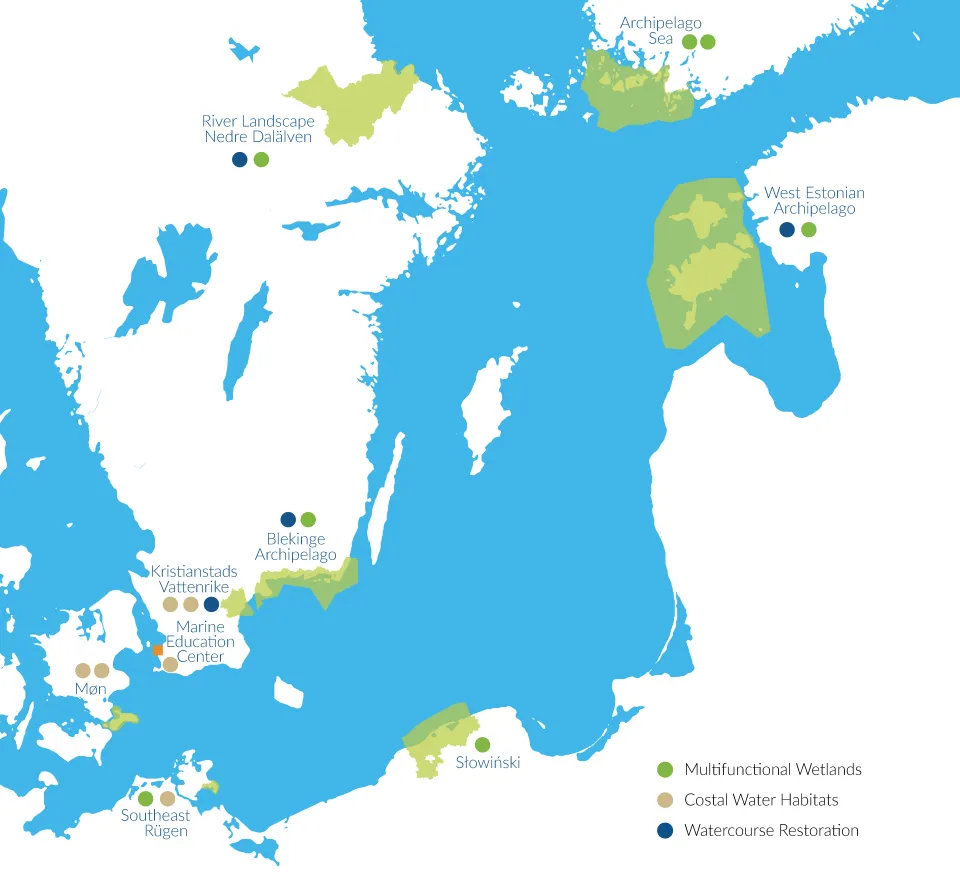
The partnership includes biosphere reserves and universities from across the Baltic Sea region, working together to develop sustainable solutions. As biosphere reserves are the main implementers of the project results, they help ensure the long-term sustainability of the outcomes.
Project Results in Estonia
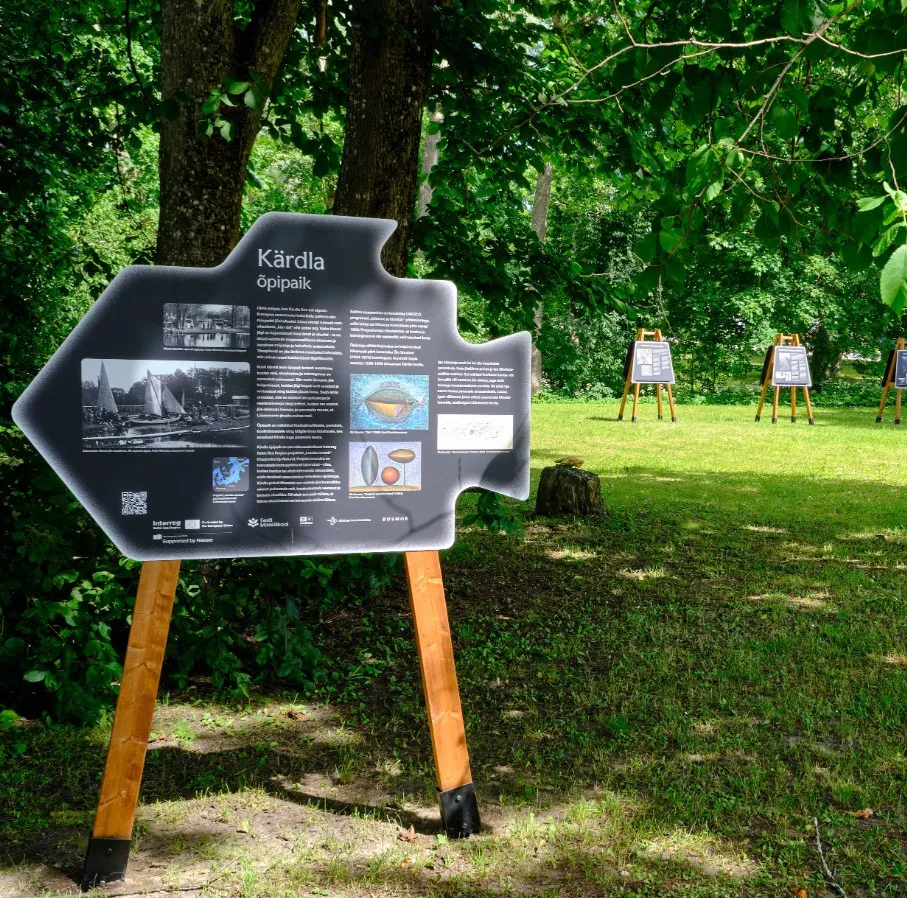
As part of the project, two learning sites with different thematic focuses have been established on the island of Hiiumaa in Estonia. The Nuutri River learning site in Kärdla focuses on watercourses, catchment water management and the factors contributing to flood risk. The Köönaauk learning site in Kõrgessaare explores wetlands, coastal lakes and their associated habitats. The learning sites are open to all visitors and also provide opportunities to participate in citizen science activities. Kärdla School and Lauka School can also use the sites for educational purposes.
The Nuutri learning site focuses on the movement of water within a catchment and the impact of human activities on the river’s natural processes. It explores how drainage, urbanisation and rapid runoff affect the water regime, as well as the role of floodplains, riparian zones and wetlands in slowing down and retaining water. Other topics include river meandering, sediment transport, fish migration, riverbank stability and water quality. Particular emphasis is placed on Nature-Based Solutions that help reduce flood risk, improve the condition of habitats and limit the transport of pollutants into water bodies.
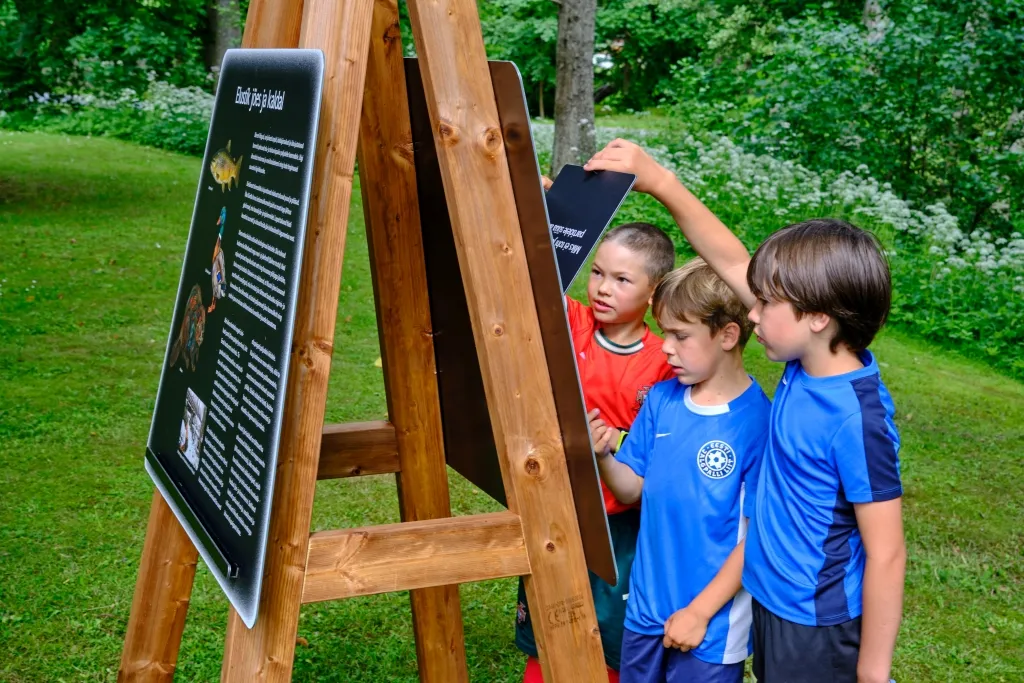
The Köönaauk learning site focuses on the functioning of wetland and coastal ecosystems. Its themes include the role of wetlands in water retention and purification, coastal meadows, birdlife, fish habitats and spawning grounds, and the role of streams in connecting different aquatic environments. The site also examines the impact of human-made structures on the natural water regime and explores opportunities for preserving and restoring natural processes.
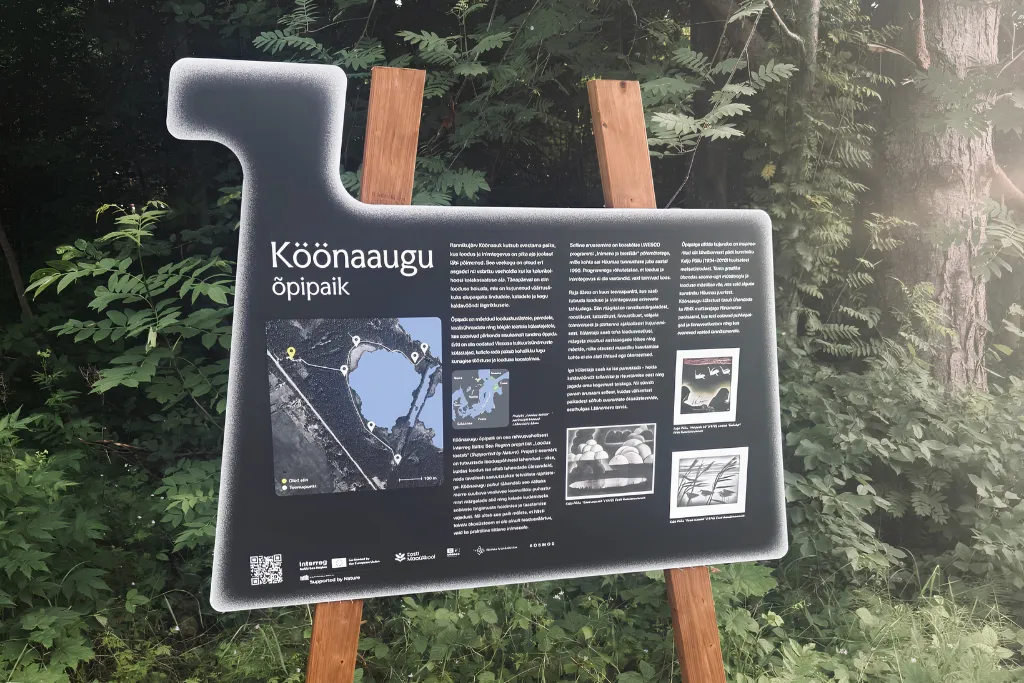
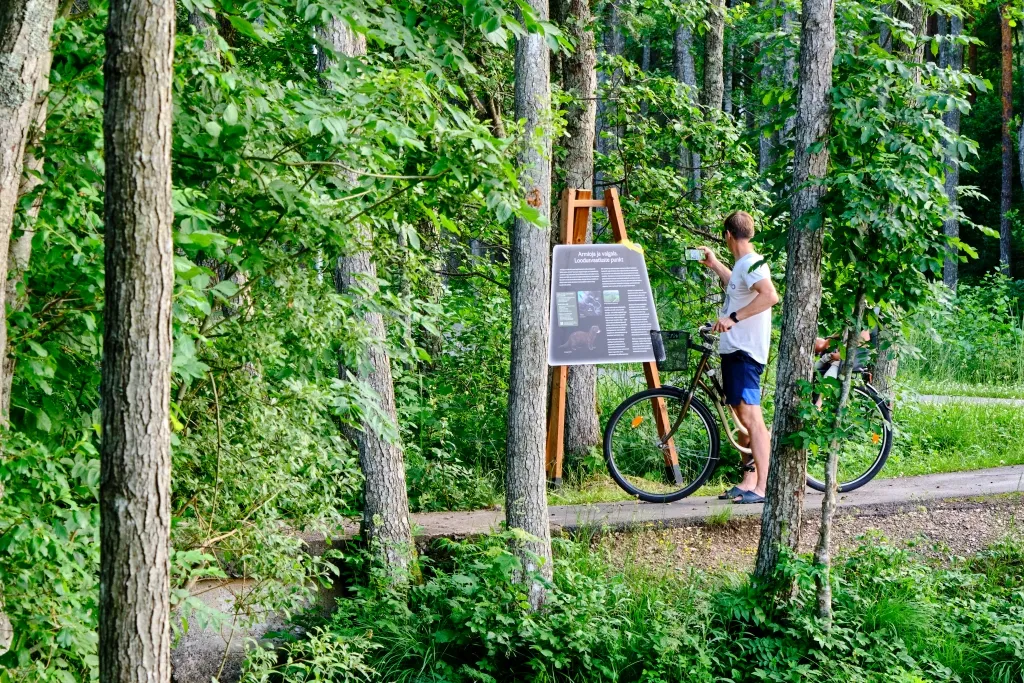
Both learning sites are primarily designed to support environmental education and outdoor learning, but they can also be used for nature tourism. The information boards installed at the sites bring together knowledge gathered during the project and contribute to the development of nature tourism in the region.
Preparations for the learning sites included compiling existing research and background information, involving experts and students, and assessing the suitability of the locations in terms of nature conservation, accessibility and visitor safety. The information boards were designed in cooperation with Kosmos spatial designers. Their visual design and form were inspired by the works of Hiiumaa artists Kaljo Põllu and Ülo Sooster.
At Köönaauk, the on-site content is complemented by a virtual tour, which allows users to explore the topics in a digital environment. The virtual tour supports the use of the learning site for educational purposes, helps communicate the project results and contributes to the wider dissemination of knowledge about Nature-Based Solutions. The virtual tour is available at sbntuur.emu.ee.
The “Supported by Nature” project is funded by the Interreg Baltic Sea Region Programme and has a total budget of €4.47 million.
Project duration: November 2023 – October 2026.
More information about the project is available at https://interreg-baltic.eu/project/supported-by-nature/link opens in new page , and the project Guide can be found at https://biosfarprogrammet.se/sbnlink opens in new page .