
Estonian University of Life Sciences researcher Kristel Panksep led an international collaboration that produced FunAqua, a dataset for studying aquatic fungi. FunAqua brings together DNA data on fungi from water bodies in 87 countries across all continents. It contains data from 1076 sediment samples and 1299 filtered water samples collected at 1452 sampling sites.
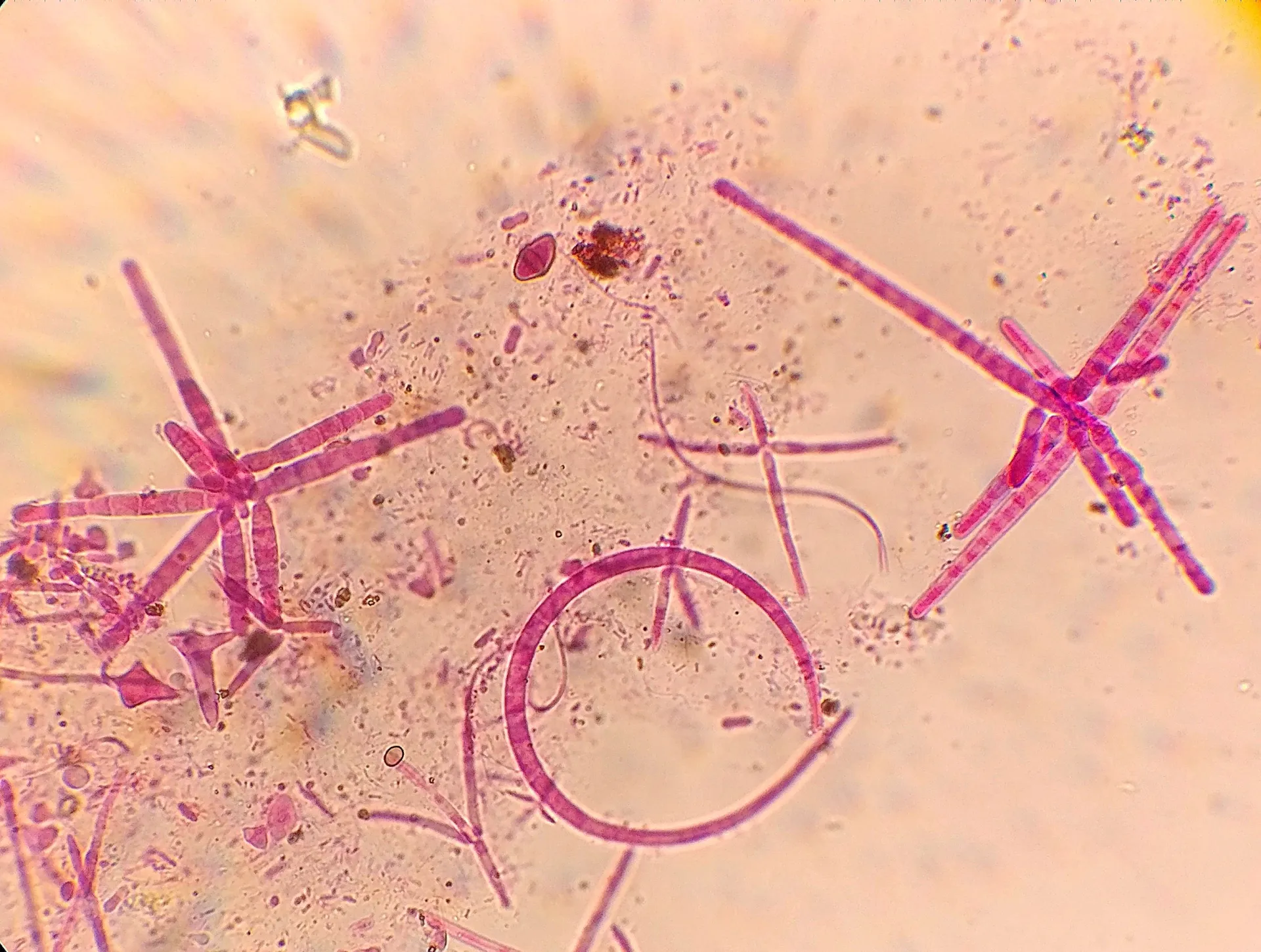
Fungi help break down plant material in water bodies, may influence algal blooms, and form part of aquatic food webs. Yet much less is known about their diversity and distribution than about terrestrial fungi. Previous studies have been difficult to compare because sampling and analysis methods have varied. FunAqua set out to bring samples and data from different places together in a consistent, comparable dataset.
From a shared idea to worldwide sampling
The idea for FunAqua came from Leho Tedersoo who is a Professor of mycorrhizal studies at the University of Tartu and Kristel Panksep, a researcher at the Chair of Hydrobiology and Fisheries at the Estonian University of Life Sciences. Panksep led and coordinated the international project, which was based on voluntary collaboration. University of Tartu doctoral student Victoria Prins, whose research is also supervised by Panksep, played a central role in compiling the dataset and writing the article.
Researchers at the Estonian University of Life Sciences and the University of Tartu developed protocols for collecting samples, filtering water, and storing and transporting samples. Samples were collected between March 2018 and September 2024. Volunteers worked alongside researchers, helping to obtain samples from places that were difficult to reach. For example, samples for FunAqua were collected in Antarctica and the Arctic during expeditions aboard the sailing vessel Admiral Bellingshausen.
All samples arriving from around the world were received at the Estonian University of Life Sciences, where they were registered, sorted, entered into a shared database, and stored for further processing. The university also carried out chemical analyses of 558 unfiltered water samples.
FunAqua enables researchers to compare fungal communities across regions and types of water body, and to investigate how they relate to environmental conditions. “FunAqua’s value lies not only in the number of samples, but in the fact that samples and data from 87 countries were brought together into a comparable whole,” Panksep said. “The dataset now makes it possible to investigate questions that could not be answered using data from a single country or research group.”
From samples to a public dataset
DNA was extracted from the samples, and the laboratory work needed to prepare them for sequencing was carried out at the University of Tartu’s Centre of Mycology and Microbiology. The DNA was sequenced at the Norwegian Sequencing Centre at the University of Oslo. The resulting sequences were then processed using a consistent analysis workflow. Differences in sampling caused by local conditions were documented so that users can take them into account when interpreting the results.
After quality control, 50 152 fungal operational taxonomic units (OTUs), or groups of similar DNA sequences, were identified in the dataset. These help researchers study fungal diversity but do not always correspond to biological species. In addition to DNA data, FunAqua includes descriptions of sampling sites and data on water and sediment chemistry.
The dataset is freely available to researchers and will be expanded over time. FunAqua’s data tables are available in Zenodolink opens in new page, and the raw DNA data are in the European Nucleotide Archivelink opens in new page. Taxonomic identifications will soon be added to the PlutoF platform, and DNA-based biodiversity observations to GBIF. FunAqua’s sampling protocols are also being used in the follow-up projects FUNACTIONlink opens in new page and MoSTFunlink opens in new page.
The FunAqua dataset is described in an article published in Scientific Datalink opens in new page. Victoria Prins is the first author and Kristel Panksep the last author. The article has 240 contributors, 22 of whom are affiliated with the Estonian University of Life Sciences.
The study was funded primarily through donations. The authors were supported by the Estonian Research Council through projects PUTJD1240 (Kristel Panksep) and PRG632 (Leho Tedersoo), and by the Estonian University of Life Sciences through project P190250PKKH (Kristel Panksep). The work of researchers at the Estonian University of Life Sciences was also supported by projects P240187PKKH, P230180PKKH, and P190258PKKH. A full list of authors and funding sources is published in the *Scientific Data* article.
Editor

Research Communication Specialist
Rector's Area of Responsibility
Department of Marketing and Communication
53585680
53585680More information

Appointed Research Fellow in Molecular Ecology
Institute of Agricultural and Environmental Sciences
Chair of Hydrobiology and Fisheries
