
Olavi Kurina, Professor of Entomological Systematics at the Estonian University of Life Sciences, spent three weeks at Korea University in South Korea. He supervised doctoral students, joined fieldwork and studied local insect fauna, finding several previously undescribed species. Their study will continue jointly with Korean researchers.
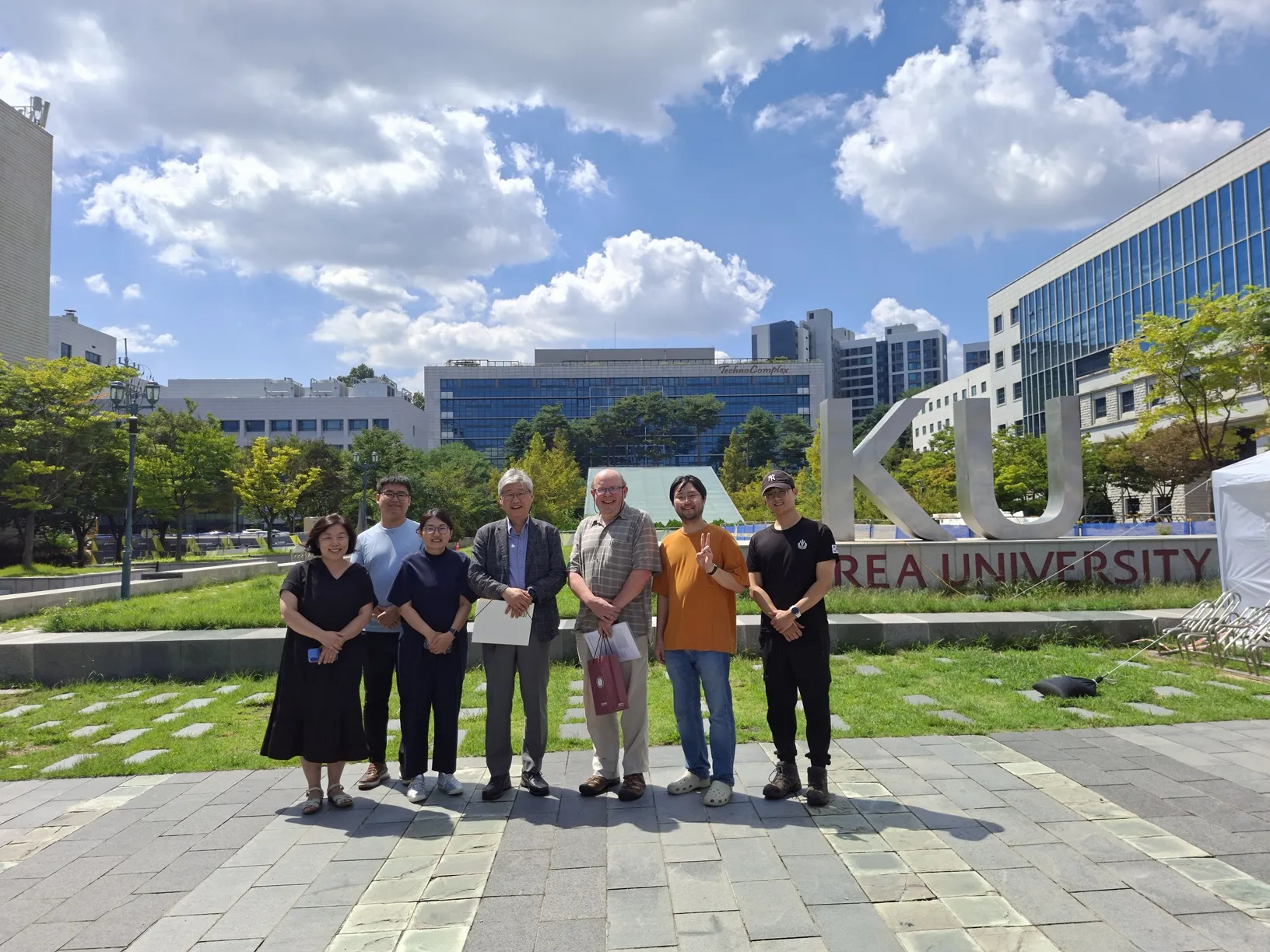
The collaboration began a year ago, when Professor Yeon Jae Bae from Korea Universitylink opens in new page contacted Kurina with the aim of developing the university’s research in systematic entomology and involving a taxonomy expert in the process. Last year, two Korean doctoral students spent nearly three weeks at the Estonian University of Life Sciences under Kurina’s supervision. They learned about methods used in insect research and analysed material they had collected themselves. “They wanted to gain experience, learn the technologies and identify their own material. Now I was invited to South Korea,” Kurina explained.
Kurina’s research focuses on insect diversity and taxonomy. He uses both morphological and molecular methods and mainly studies the dipteran superfamily Sciaroidea. Over the course of his scientific career, he has described more than 200 new taxa from different regions of the world.
South Korea’s fauna offers many research opportunities
One of the aims of the three-week visit was to continue supervising the doctoral students who had previously studied in Estonia. Kurina also took part in fieldwork and helped identify both previously collected and freshly caught insect material. He was particularly interested in the fauna of the Eastern Palearctic, the eastern part of Eurasia, which differs considerably from that of Northern Europe.
Species distributions vary: some species occur from Spain to Japan, while others are found mainly in Europe or Asia. South Korea’s location makes the region particularly biologically diverse, as temperate fauna meets influences from farther south. “There is also an Oriental and southern component. In some groups, species can be found there whose range extends as far as Thailand or Malaysia,” Kurina said.
Kurina’s more specific field of research is fungus gnats. Although thousands of species in this group have been described worldwide and hundreds are known in Estonia, the fungus gnat fauna of Korea has so far been studied relatively little. The number of species recorded there probably represents only a small share of the actual species richness, which means the region offers many opportunities for taxonomic discoveries.
Previously undescribed species found in the collected material
The material studied in Korea contained several species that have not yet been described. To confirm their status, the specimens must now be carefully compared with earlier descriptions and material preserved in scientific collections. “We sorted these species out, and now we need to start describing them one by one. There is certainly material there that is new in global terms,” Kurina said.
The formal description of a new species is preceded by thorough research. Scientists analyse the characteristics of the specimens and, where necessary, use both morphological and genetic methods. Only after comparisons have been made and the distinctiveness of the species has been confirmed can it be given a scientific name. As the material was collected in Korea, the primary type specimens, or holotypes, of the new species will be deposited in Korea’s national scientific collection. Kurina brought part of the material to Estonia to continue studying it at the Estonian University of Life Sciences.
South Korea’s biodiversity is being mapped as part of a long-term national programme. According to Kurina, around 50,000 terrestrial species have so far been recorded in the country, but a large share of its biodiversity has yet to be scientifically documented. Researchers use both morphological characteristics and genetic data in their studies.
The collaboration continues
Estonian and South Korean researchers will continue analysing the collected material, describing potential new species, and supervising early-career researchers. The international collaboration supports doctoral training and gives researchers at the Estonian University of Life Sciences access to material from other regions. Studying such material helps build a more complete picture of the global diversity and distribution of species.
Editor:

Head of Communications, Institute of Agricultural and Environmental Sciences
Institute of Agricultural and Environmental Sciences
Administration of the Institute of Agricultural and Environmental Sciences
53312928
53312928More info:

Professor in Entomological Systematics
Institute of Agricultural and Environmental Sciences
Chair of Biological Diversity and Nature Tourism
+372 7311887
+372 7311887